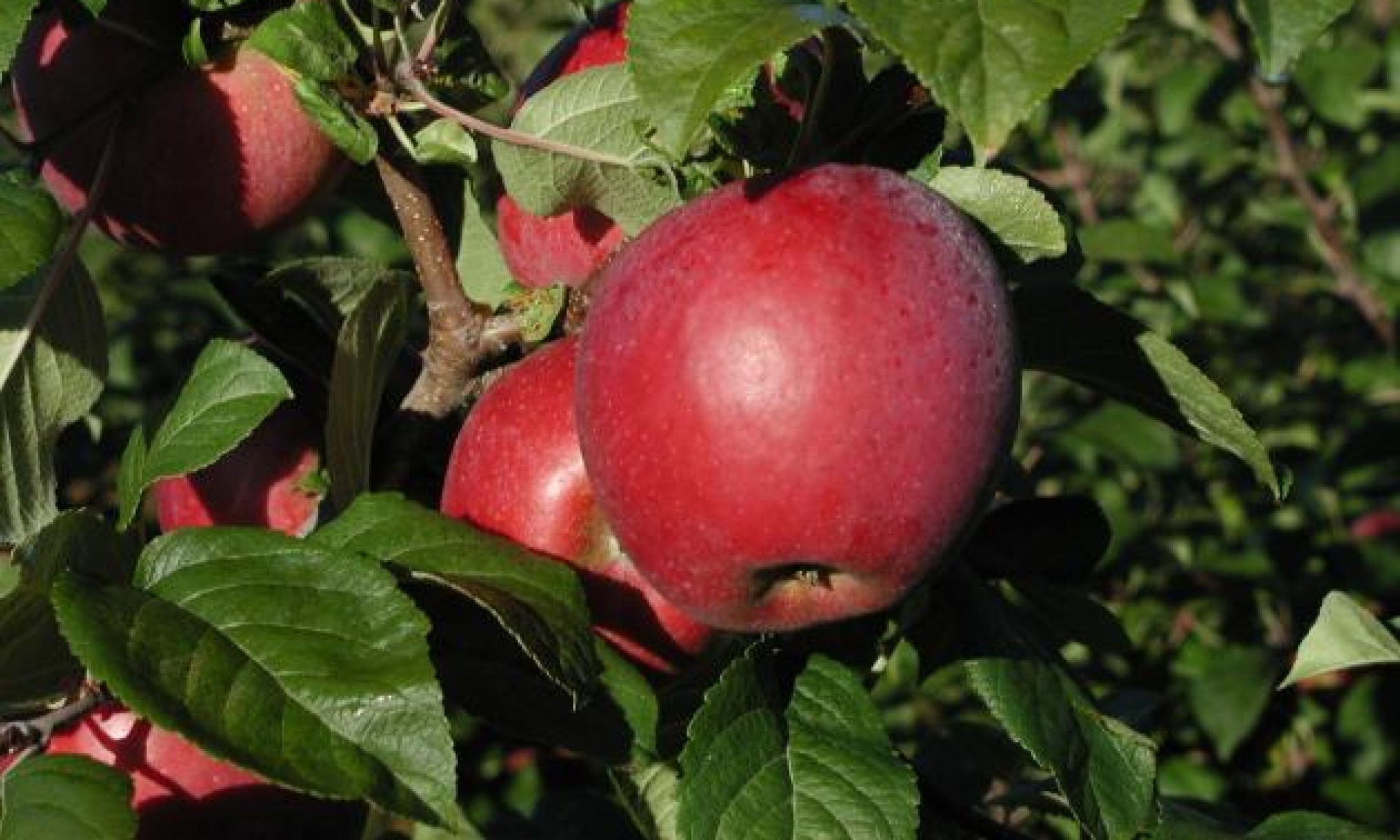
The names X-spot, X-rot, and Nigrospora spot have been applied to a small, circular, depressed, necrotic spot typically on the calyx end of apple fruit in the mid-Atlantic region. Although uncommon, incidence of X-spot as high as 86% was reported on unprotected ‘Golden Delicious’ and ‘Rome Beauty’ fruit in 1950. Other susceptible cultivars include ‘Jonathan’, ‘Stayman Winesap’, and ‘York Imperial’. A fungus has been associated with X-spot lesions, but the typical lesion symptom has not been duplicated by controlled inoculation, …
How do I determine the spacing between trees on a given rootstock for my apple orchard?
Determining the correct spacing for a rootstock/variety combination in a particular orchard is worth a lot of pre-planting thought and effort. Trees that are planted too close together for their vigor will be a struggle to maintain during every year for the life of the planting. Additionally, the amount and quality of fruit production will decline when inadequate light is available throughout the tree. On the other hand, trees that don’t have enough vigor to fill their spacing will result …
What are burr knots?
Burr knots are root initials that develop above ground. Rootstocks are selected for their ability to produce roots, but some rootstocks try to produce roots above the ground. The severity of burr knot development differs depending on the variety and region. In several rootstock trials, trees in Virginia tended to produce more burr knots than trees in most other locations. Sometimes several burr knots will coalesce and partially girdle the tree. Burr knots are considered undesirable because they can be …
Are there restrictions to grafting my own apple trees?
Some cultivars of apple are under patent. If the patent is still applicable, then you must contact the nursery (or whoever holds the patent) and pay the royalty for each tree you propagate. Failure to do so could lead to criminal penalties, a monetary judgment (and/or fine), and destruction of the trees you propagated. Apple cultivars that are part of an exclusive club or licensing agreement are also illegal to propagate, and there usually is no avenue for a “non-club …
How should I choose among dwarfing rootstocks for my apple orchard?
Choosing the best dwarfing rootstock for your orchard will depend on multiple factors. Probably one of the most important is the cultivar that will be propagated on the rootstock. Cultivars vary greatly in vigor, with some being very weak growing (‘Honeycrisp’) compared to others that are very vigorous (‘Cripps Pink’/’Pink Lady’). You should select the cultivar/rootstock combination that will give you the desired tree size for your desired tree density, support system, soil, and management system.
The disease sensitivity of …
Can I grow apple trees in my windbreak?
The primary function of a windbreak is to reduce wind speed around areas in need of protection. If you are interested in having multiple species in your windbreak, apples might be a good choice.
- Locate the apple trees in interior or wind-sheltered rows as their tolerance to wind is not as great as that of other species.
- Place the apple trees closer than in a typical orchard, and plan for a reduced fruit yield, particularly if the windbreak plantings are
What is blister spot, and how do I identify and manage the disease?
Blister spot is a bacterial disease of apple fruit caused by Pseudomonas syringae pv. papulans. This disease is of economic importance mainly on the cultivar ‘Mutsu’ (‘Crispin’) but can be seen on ‘Golden Delicious’ when grown adjacent to ‘Mutsu’. Even though fruit grow to maturity and no detectable yield loss occurs, severe infection results in ugly fruit and greatly reduces fresh market quality. For more information and images, read this article on Blister Spot of Apple.
Answer provided …
What is quince rust, and how do I identify and manage the disease on apple trees?
Quince rust is a fungus disease caused by Gymnosporangium clavipes. The fungus infects fruit, but not leaves, of most apple cultivars. It infects both leaves and fruit of hawthorn. Typically, an infection on apple fruit shows up first as a slightly raised purplish area on the calyx end of the fruit. On mature fruit, the lesion is sunken and dark green or purple. Usually, the entire calyx end of the fruit is involved, and the flesh is deformed to …
What is Nectria twig blight, and how do I identify and manage the disease?
Nectria twig blight is a fungus disease that results in dieback of apple twigs. It is caused by the fungus Nectria cinnabarina. Recognition of the disease is important because it is often confused with fire blight, which requires different control measures. For more information and images, read this article on Nectria Twig Blight of Apple.
Answer provided by Alan R. Biggs, West Virginia University.…
What is black rot, and how do I identify and manage the disease on apple trees?
Black rot is a fungus disease that can cause serious losses in apple orchards, especially in warm, humid areas. Three forms of the disease can occur:
- a fruit rot, which causes fruit to become unmarketable;
- a leaf spot known as frogeye leaf spot which, if severe, can result in defoliation which weakens the tree; and
- a limb canker which can girdle and eventually kill entire branches.
Read more and see images in this article, Black Rot of Apple.…
