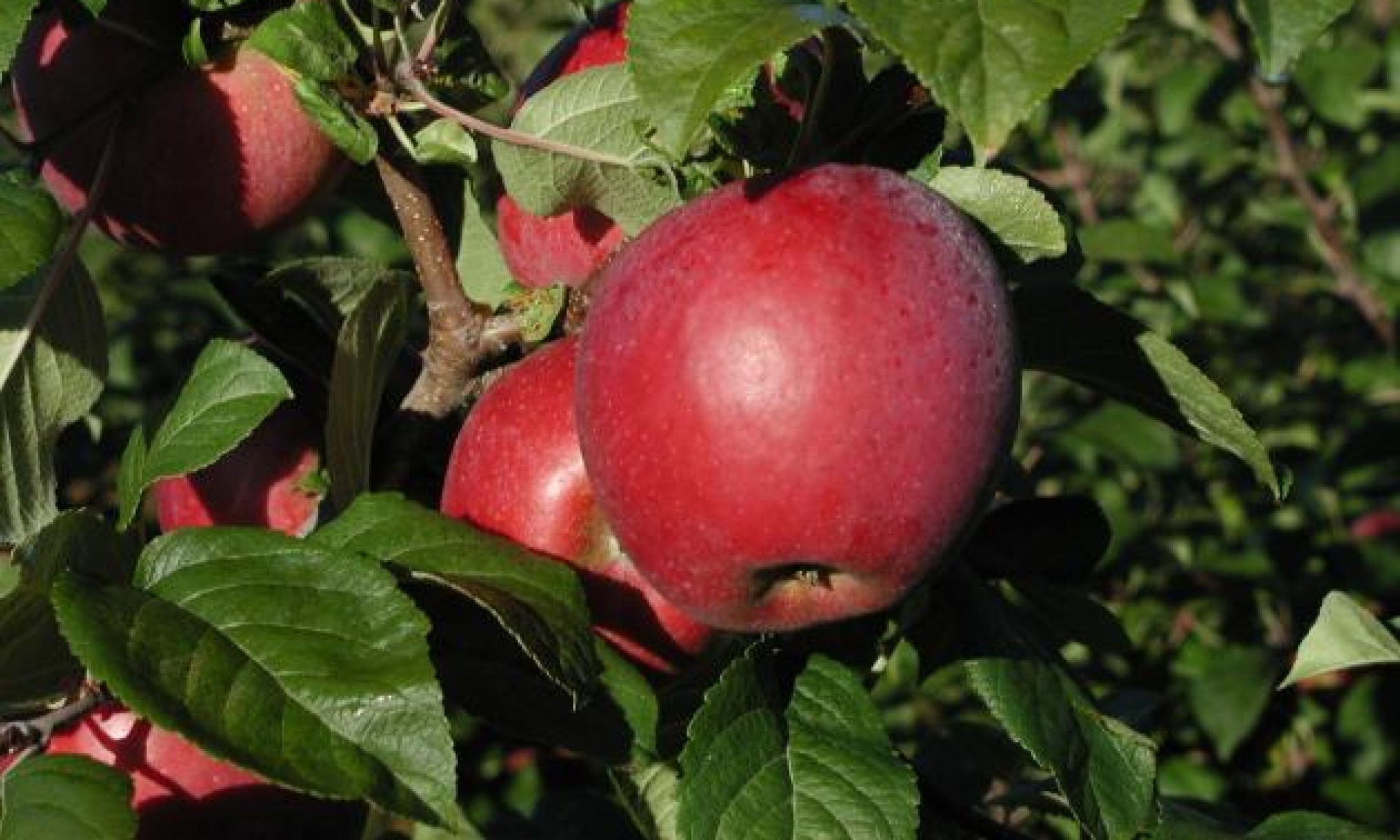
The brown flesh around the core may have been caused by a fungus such as Alternaria sp.that entered through the calyx early in the fruit’s development. The condition, called moldy core, often cannot be detected until the fruit is harvested and cut. Here is a note about moldy core from the University of Massachusetts Apple Team:
“Moldy Core: This disease causes a rot with visible fungal growth in the seed cavity and core of some apple cultivars, particularly Delicious …
What is the method to get apple trees to set fruit?
All varieties of apple trees require some cross-pollination for fruit set. Even though some varieties are listed as self-fruitful, they will set fruit more heavily and more regularly if they are cross-pollinated. For solid block plantings, select varieties such as spur-type ‘Winter Banana’, spur-type ‘Golden Delicious’, or flowering crabapples such as ‘Manchurian’ and ‘Snodrift’ for pollinizers. Place honeybees in apple orchards when the first blossoms open. For more information on managing fruit trees, see this article on Pollination of Tree …
What are some suggestions for growing apples successfully in Colorado?
Reliable varieties for this area are ‘Cox Orange’, ‘Red Delicious’, ‘Golden Delicious’, ‘McIntosh’, ‘Jonathan’, ‘Fameuse’, ‘Northwest Greening’, ‘Joyce’, ‘Wealthy’, ‘Lodi’, and ‘Haralson’. Select two different varieties for cross pollination and good fruit production. In most cases, planting semi-dwarf varieties rather than standard size trees will allow enough room for at least two different varieties in the landscape. For additional hints for growing apples successfully, see the Colorado PlantTalk script on Apples.…
I missed pruning a few dead branches in an apple tree. Can I remove them in the summer?
The best time to prune is early in the Spring before bud break. Dead or broken branches can be removed anytime, but keep other pruning to a minimum.…
Should I wait until after a frost to harvest my apples?
No, harvest apples before the temperature drops below about 28°F. That is canopy temperature and will not necessarily be reflected by the thermometer on your porch.…
I have a 'Gala' apple tree. Would planting a 'Granny Smith' tree in my yard serve as a pollinator for the other?
Yes, ‘Granny Smith” would be a good choice. If you can’t find a ‘Granny Smith’ tree, then a ‘Mollies Delicious’ would work well. To see a pollination chart for apple varieties, refer to this article on Pollination of Fruit Trees.…
What are the disease-resistant apple cultivars recommended for Wisconsin?
The following are some of the cultivars that will grow well in Wisconsin:
• Redfree: This is an early season, medium-sized, attractive red apple. You can store these apples up to 30 days.
• Prima: Prima produces medium to large fruit, red blushed on yellow skin. Mild, juicy, white flesh matures a week before McIntosh. You can store this apple for one to two months.
• Priscilla: This is a medium to large apple if you thin trees adequately after …
What causes the yellow leaf spots that later develop a brown center on my apple leaves?
This a fungal disease called cedar-apple rust. Cedar-apple rust is a common disease of apple and crabapple. The fungus that causes the disease, Gymnosporangium juniperi-virginianae, is unusual because it must spend a phase of its life cycle as a parasite on Juniperus species, such as red cedar or ornamental junipers. Control: Grow resistant apple or crabapple varieties. Apple varieties that normally show good to excellent resistance to cedar-apple rust include ‘Red Delicious’, ‘McIntosh’, ‘Arkansas Black’, ‘Winesap’, ‘Mollies Delicious’, ‘Spartan’, …
Which rootstocks are winter hardy?
Rootstocks can affect the development of cold hardiness in apple trees, but this is a complex trait, and it may depend on what time of the winter with which one is concerned. Some rootstocks, such as Robusta 5, can cause a tree to harden early in the winter, and these trees are very cold tolerant during the early winter. Some rootstocks, such as Robusta 5, that induce early cold hardiness also lose their hardiness early in the winter in response …
What experimental rootstocks for apples are being looked at in the U.S.?
Many apple rootstocks are being evaluated for potential use in the United States by the NC-140 Multi-State Research Committee. These rootstocks have come from breeding programs in the United States (CG, G), Great Britain (M), Germany (PiAu and Supporter), Poland (P), Czech Republic (J-TE), Japan (JM), and Russia (B). Specific rootstocks that are currently under evaluation in NC-140 plantings include the following: B.9, B.10, B.7-3-150, B.7-20-21, B.67-5-32, B.64-194, B.70-6-8, B.70-20-20, B.71-7-22, G.11, G.16, G.41, G.202, G.935, CG.2034, CG.3001, CG.4003, …