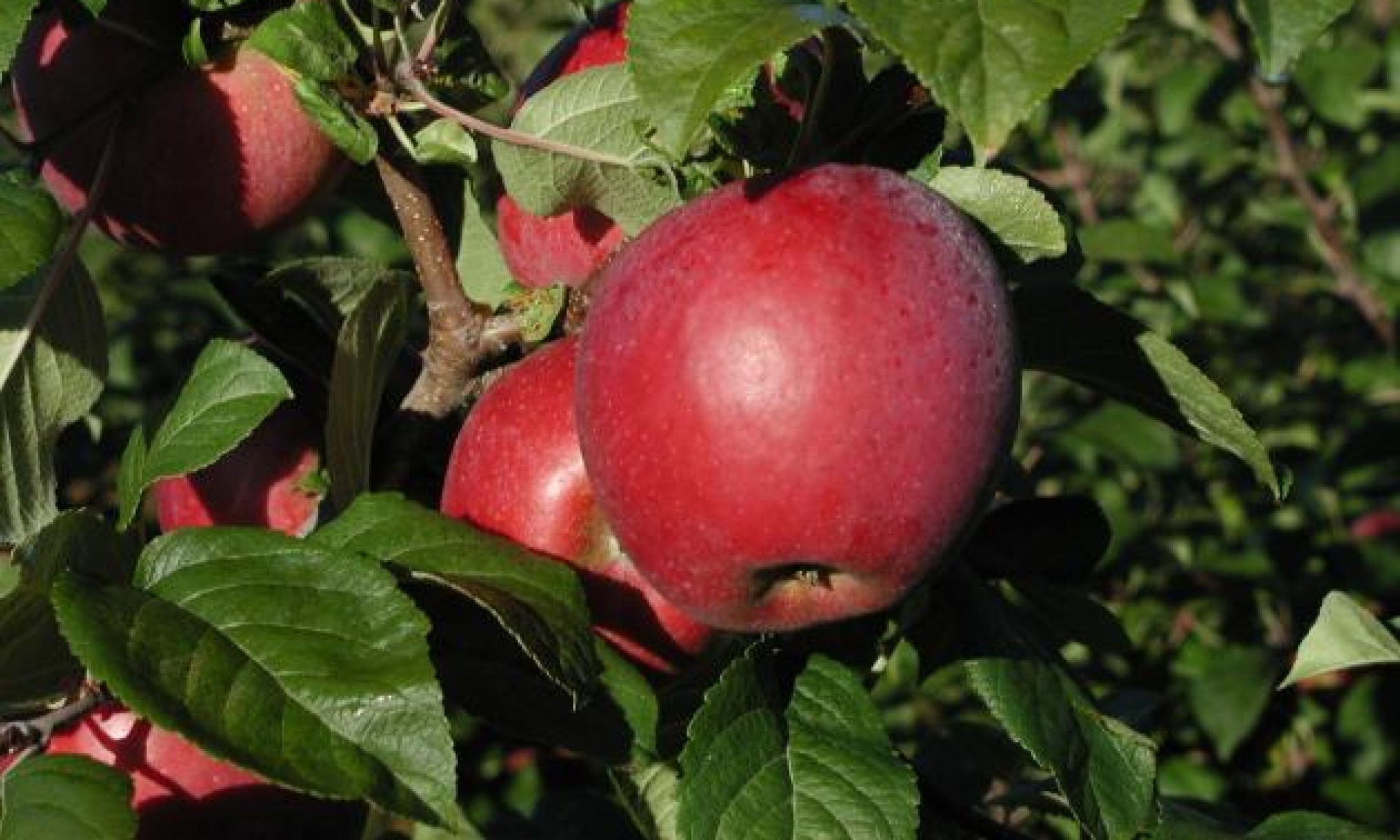
State of being precocious; a measure of time to flowering within the life span of an orchard. Dwarf rootstocks are typically more precocious than semi-dwarf or standard rootsocks. Apple varieties can differ in precocity too — for example, Honeycrisp is typically very precocious, while Northen spy is notoriously late bearing.…
Nectria Twig Blight of Apple
Nectria twig blight is a fungus disease that results in dieback of apple twigs. It is caused by the fungus Nectria cinnabarina.
Recognition of the disease is important because the disease is often confused with fire blight, which requires different control measures. In late May to early June, shoot growth on infected twigs begins to wilt and die (fig. 1). Small, sunken cankers are found at the bases of the wilted shoots. Leaves on infected shoots appear to die from …
Rootstock (apples)
The trunk and/or root material onto which buds or scions are inserted in grafting or budding.
 …
…
Powdery Mildew on Apple
Powdery mildew on apple is a fungus disease caused by Podosphaera leucotricha. It can be a persistent disease of susceptible apple cultivars wherever apples are grown. It is the only fungal apple disease that is capable of infecting without wetting from rain or dew. Mildew severity and the need for control measures are related to cultivar susceptibility and intended fruit market. (Note: Many other powdery species occur on a wide variety of plant hosts.)
Powdery mildew causes whitish lesions on …
X-Spot of Apple
The names X-spot, X-rot, and Nigrospora spot have been applied to a small, circular, depressed, necrotic spot typically on the calyx end of apple fruit in the mid-Atlantic region (Fig. 1). Although uncommon, incidence of X-spot as high as 86% was reported on unprotected ‘Golden Delicious’ and ‘Rome Beauty’ fruit in 1950. Other susceptible cultivars include ‘Jonathan’, ‘Stayman Winesap’, and ‘York Imperial’.
| Figure 1. X-spot is likely a fungal disease, although the pathogen is undetermined at this time. Photo: A. |
|---|
Black Rot of Apple
Black rot is a fungus disease that can cause serious losses in apple orchards, especially in warm, humid areas. The black rot fungus covers a wide geographical range and can infect many hosts other than apple. The role these hosts play in the spread and development of the disease is not known. Three forms of the disease can occur: a leaf spot known as frogeye leaf spot, a fruit rot, and a limb canker. Severe leaf spotting can result in …
Hail Injury on Apple Trees and Fruit
Hail can injure apple fruit, shoots, and limbs. The extent of the injury usually depends on the size and shape of the hail and the duration of the event. Injury can range from torn or shredded leaves and small dents that don’t break the fruit skin to effects so severe that an entire crop is lost due to physical damage. In some cases, replacement of trees is necessary, especially when young trees have significant bark injury. Fungicide protection of injured …
Sources for Apple and Other Fruit Trees
Many nurseries supply fruit trees to commercial and home growers. We’ve assembled lists of some of these nurseries to help you source particular plant material or locate nurseries in your region. As Cooperative Extension educators, our goal is to provide you with basic information and resources to make informed decisions. These lists are for informational purposes only. They are neither comprehensive nor intended to promote any individual businesses.
Fire Blight of Apple
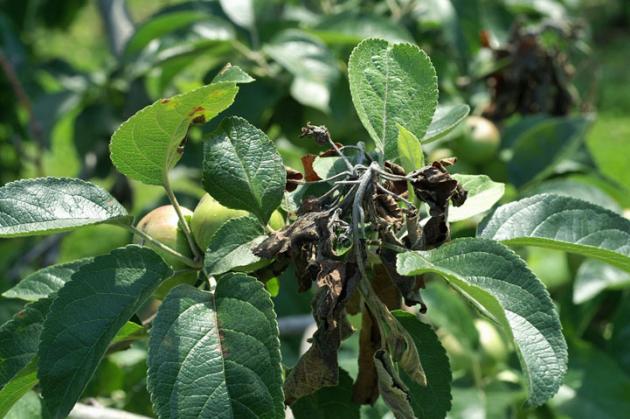
Figure 1. Blossom cluster and adjacent shoot with fire blight. (Alan R. Biggs, West Virginia University)
Fire blight is a destructive bacterial disease of apples and pears that kills blossoms, shoots, limbs, and, sometimes, entire trees (Figs. 1, 2). The disease is generally common throughout the United States wherever apples are grown. Outbreaks are typically very erratic, causing severe losses in some orchards in some years and little or no significant damage in others.

Figure 2. Apple shoot with fire …
International Fruit Tree Nurseries
D&L Nursery, 75 Avenue Joxe, 49100 Angers, France
Janssen Brothers Nurseries Limited, PO Box 2711 6030 aa Nederweert, Holland
Jos Morren Nurseries, Bosstraat 85-85 3545, Halen, Belgium
Nakajima Tenkoen Co., No. 34, 1-Chome Nakajima dori, Higashine City, Yamagata Perf. Japan 999-37
Schrama Nursery, Prof. Zuurlaan 10, 8256 PE, Biddinghuizen, Holland
Star Fruits, Les Genets D’or, No. 14, 84430 Mondragon, France
Viveros Requinoa, Victoria Subercaseaux No. 323, Santiago, Chile
Wiel Willems, Zuidwesterringweg 5-II, 8308 PC Nagele, Holland
As Cooperative Extension educators, …