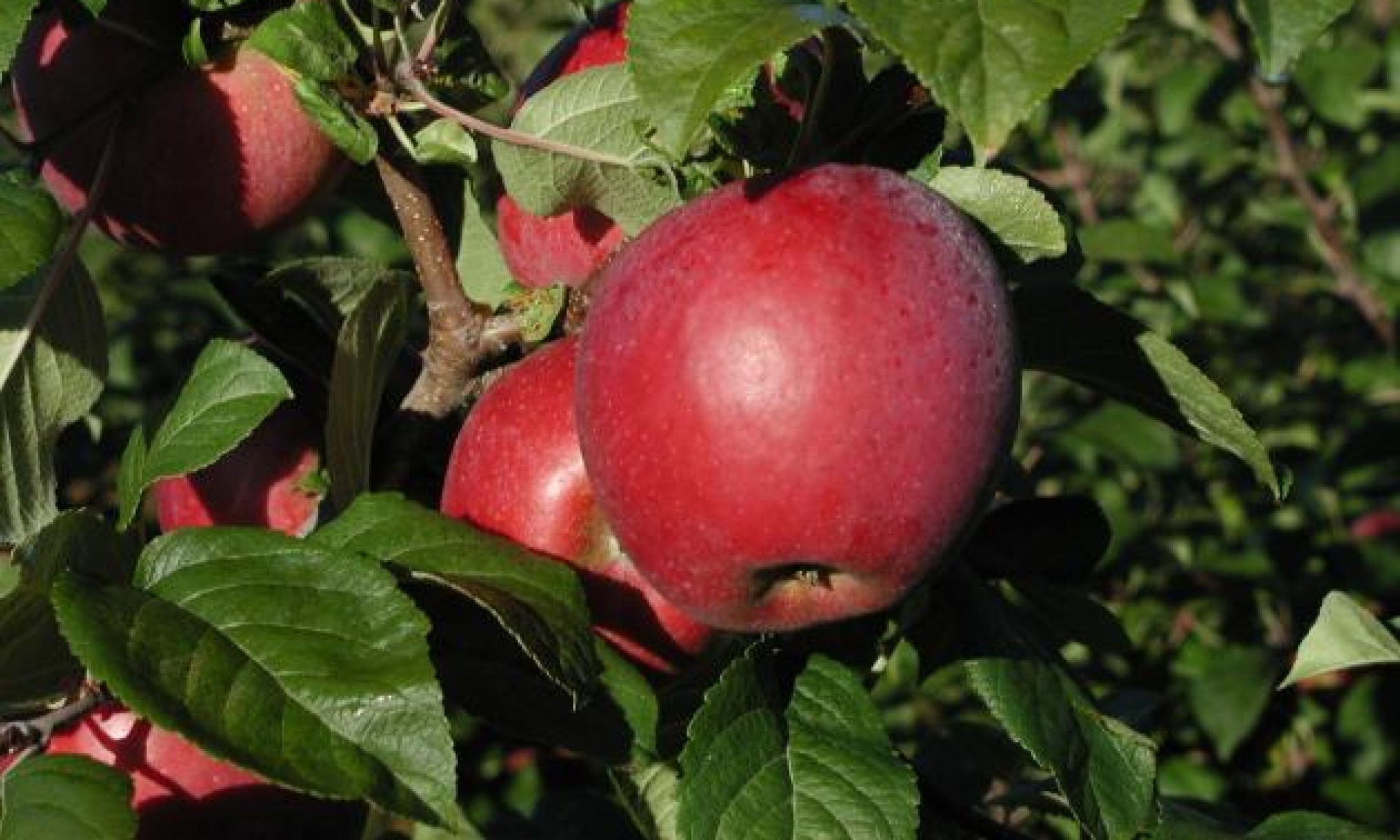
Latent Viruses in Apples

A large number of latent viruses have been identified in apple. More common latent viruses include apple chlorotic leaf spot virus, apple stem pitting virus, and apple stem grooving virus. These viruses also cause diseases in other fruit crops. Apple chlorotic leaf spot virus causes pear ring pattern mosaic and has been found in all pome and stone fruit species. Apple stem pitting virus is the causal agent of pear vein yellows.

As the designation “latent” implies, these viruses are …
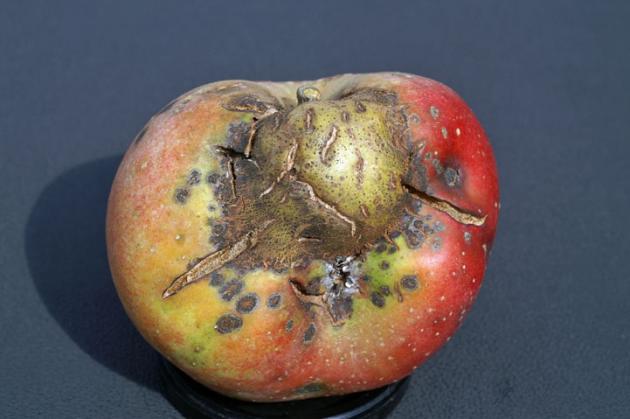
Table of Apple Cultivar Susceptibility to Bitter Rot


Bitter rot is a fungus disease that causes fruit rot during the summer and the preharvest period. The bitter rot fungi are almost worldwide in distribution and cause an especially economically important disease in the southern United States. Outbreaks can occur rapidly, and losses can be severe, especially under prolonged warm, wet weather. This table lists the bitter rot susceptibility rating of many popular apple cultivars.

Apple cultivar

Bitter rot
susceptibility ratingz

Apple cultivar

Bitter rot
susceptibility ratingz

Table of Apple Cultivar Susceptibility to Quince Rust


Quince rust is a fungus disease caused by Gymnosporangium clavipes. The fungus infects fruit, but not leaves, of most apple cultivars. It infects both fruit and leaves of hawthorn. This table lists the quince rust susceptibility of numerous apple cultivars.

Apple cultivar Quince rust
susceptibility ratingz
Apple cultivar Quince rust
susceptibility ratingz
Ambrosia HS Milton R
Arkansas Black HS Mutsu R
Arlet S Northern Spy R
Baldwin R Orin R
Ben Davis R Paulared R
Braeburn S Pinova

Effect of Water on Apple Trees: Not Enough or Too Much?

One of the most common causes of tree decline or death is imbalance of water demand and supply.

Not Enough Water

When water demand of a fruit tree is higher than supply, drought stress occurs. Drought stress causes wilting, yellowing of the leaves, advanced leaf fall, and premature fruit ripening or fruit drop. Often, drought stress is associated with heat stress during the hot summer months. When drought stress and heat stress coincide, scorching of the leaves occurs in addition …

White Root Rot of Apple

White root rot, caused by the fungus Scytinostroma galactinum (formerly Corticium galactinum), has been known as a parasite of apple trees for many years and is widely distributed (Canada to Texas and westward to the Pacific coast, Europe, West Indies, and Japan). It occurs in both bearing and non-bearing apple orchards. Other hosts include a wide variety of woody plants, ornamental shrubs, and herbaceous perennials, including white pine, ash, peach, blackberry, dewberry, Japanese wineberry, dogwood, sumac, white campion, holly, …

Apple Mosaic Virus

Apple mosaic virus is one of the oldest known and most widespread apple viruses. The same virus can cause line pattern symptoms in plum and rose mosaic disease. Apple mosaic virus is related to Prunus necrotic ring spot virus.

Apple trees infected with apple mosaic virus develop pale to bright cream spots on spring leaves as they expand (fig. 1). These spots may become necrotic after exposure to summer sun and heat. Most commercial cultivars are affected, but severity of …

U.S. Fruit Tree Nurseries

Adams County Nursery Inc., 26 Nursery Rd., P.O. Box 108, Aspers, PA 17304 http://www.acnursery.com/

Agri-Sun Nursery, 15935 S. Temperance Ave., Selma, CA 93662

Banning Orchards and Nursery, 4000 Grant Rd., East Wenatchee, WA 98802

Boyer Nursery & Orchards Inc., 405 Boyer Nursery Rd., Biglerville, PA 17307 http://www.boyernurseries.com/

Brandt’s Fruit Trees Inc., P.O. Box B, Parker, WA 98939 http://brandtsfruittrees.com/

Burchell Nursery Inc., 12000 State Highway 120, Oakdale, CA 95361 http://www.burchellnursery.com/

Cameron Nursery, 1261 Ringold Rd., P.O. Box 300, Eltopia, WA 99330-0300 …

International Fruit Tree Nurseries

D&L Nursery, 75 Avenue Joxe, 49100 Angers, France

Janssen Brothers Nurseries Limited, PO Box 2711 6030 aa Nederweert, Holland

Jos Morren Nurseries, Bosstraat 85-85 3545, Halen, Belgium

Nakajima Tenkoen Co., No. 34, 1-Chome Nakajima dori, Higashine City, Yamagata Perf. Japan 999-37

Schrama Nursery, Prof. Zuurlaan 10, 8256 PE, Biddinghuizen, Holland

Star Fruits, Les Genets D’or, No. 14, 84430 Mondragon, France

Viveros Requinoa, Victoria Subercaseaux No. 323, Santiago, Chile

Wiel Willems, Zuidwesterringweg 5-II, 8308 PC Nagele, Holland


As Cooperative Extension educators,

U.S. Fruit Tree Rootstock Nurseries

Brandt’s Fruit Trees, Inc., PO Box B, Parker, WA 98951 http://www.brandtsfruittrees.com

Burchell Nursery, Inc., 4201 McHenry Ave., Modesto, CA 95356 http://www.burchellnursery.com/

Cameron Nursery, 1261 Ringold Rd., PO Box 300, Eltopia, WA 99330-0300

Copenhaven Farms Nursery, 12990 SW Copenhaven Rd., Gaston, OR 97119 http://www.copenhavenfarms.com/

Cummins Nursery, 18 Glass Factory Bay Rd., Geneva, NY 14456 http://www.cumminsnursery.com/

Grootendorst Nurseries, Lakeside, MI 49116

Four Mile, 27027 South Hwy. 170, Canby, OR 97013 http://www.fourmile.com/

Lawyer Nursery, Inc., 950 Highway 200 West, Plains, MT 59859 http://www.lawyernursery.com/

Apple Scab

Apple Scab

Apple scab is a fungus disease caused by Venturia inaequalis. It is of major economic importance and, if not controlled, can cause extensive losses (70% or greater) where humid, cool weather occurs during the spring months. Losses result directly from fruit or pedicel infections or indirectly from repeated defoliation, which can reduce tree growth and yield.

Symptoms

Apple scab lesions occur on leaves, petioles, blossoms, sepals, fruit, pedicels, and less frequently, on young shoots and bud scales. The first lesions …