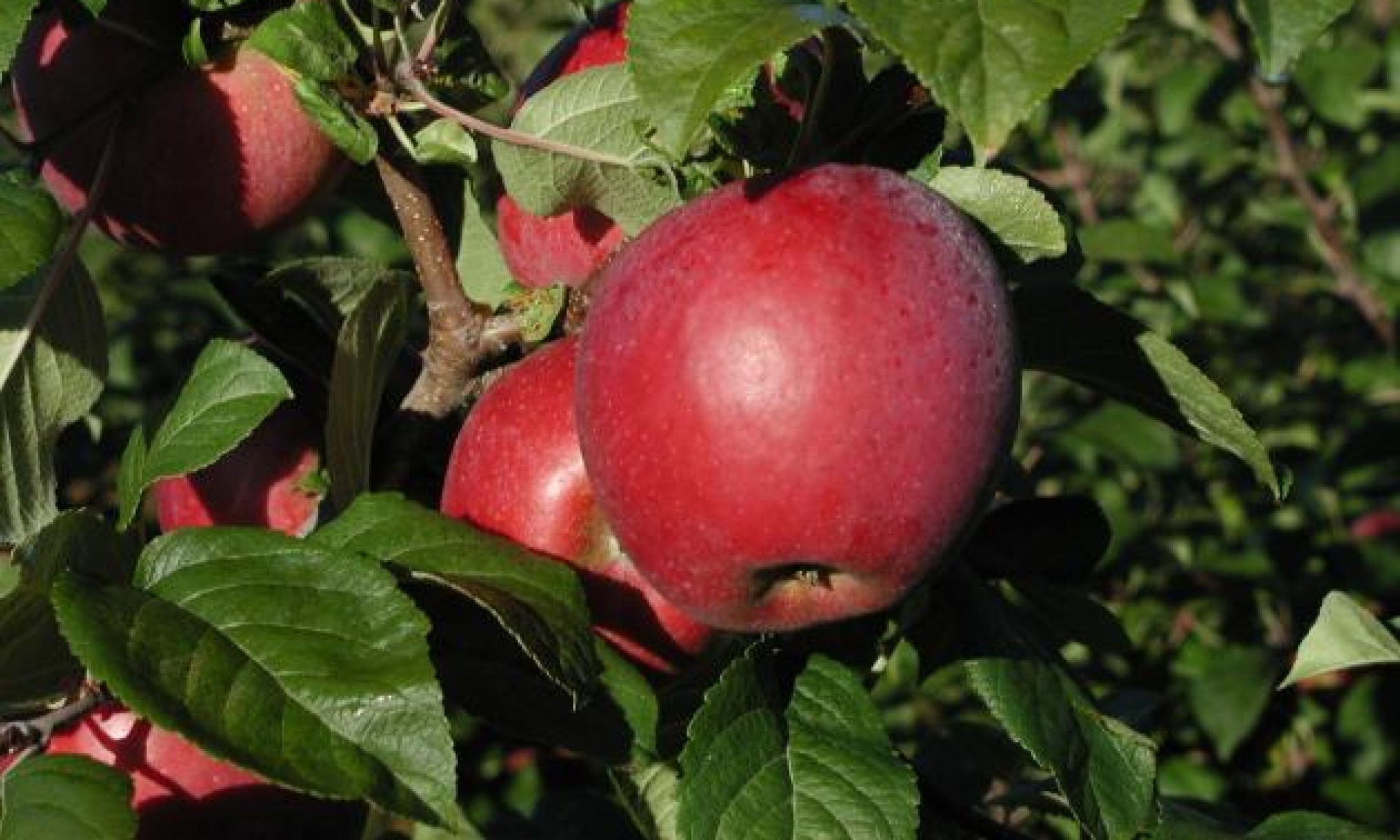
Fire blight is a destructive bacterial disease of apples and pears that kills blossoms, shoots, limbs, and, sometimes, entire trees. The disease is generally common throughout the United States wherever apples are grown. Outbreaks are typically very erratic, causing severe losses in some orchards in some years and little or no significant damage in others. This erratic occurrence is attributed to differences in the availability of overwintering inoculum, the specific requirements governing infection, variations in specific local weather conditions, and …
What apple cultivars are resistant or susceptible to powdery mildew?
Powdery mildew on apple is a fungus disease caused by Podosphaera leucotricha. It can be a persistent disease of susceptible apple cultivars wherever apples are grown. It is the only fungal apple disease that is capable of infecting without wetting from rain or dew. Mildew severity and the need for control measures are related to cultivar susceptibility and intended fruit market. More information, complete with images and tables of cultivar susceptibility and resistance, is available in this article on …
What apple cultivars are resistant to cedar-apple rust?
Cedar-apple rust is a fungus disease of apple and cedar and spends parts of its life cycle on each host. It is caused by Gymnosporangium juniperi-virginianae. The fungus can infect leaves and fruit of most cultivars in the eastern region. A notable exception is ‘Delicious’, which is nearly immune. Find more information and tables of resistant cultivars in this article on Cedar-Apple Rust.
Answer provided by Alan R. Biggs, West Virginia University.…
What apple cultivars are resistant or susceptible to bitter rot?
Bitter rot is a fungus disease that causes fruit rot during the summer and preharvest period. The bitter rot fungi are almost worldwide in distribution and cause an especially important disease in the southern areas of the United States. Outbreaks can occur rapidly, and losses can be severe, especially under prolonged warm, wet weather. Several host species can be affected. On peach and nectarine, the same fungus causes a disease known as anthracnose, and on grape it causes ripe rot. …
Do I have to stake all trees on all rootstocks?
No, you do not have to stake all trees. Generally, since we do not have commercialized dwarfing rootstocks for most stone fruits, these trees do not need to be staked. Apples are the primary tree fruit crop that needs to be staked, but not all rootstocks need to be staked; however, all trees benefit in their early life from staking to prevent wind whipping and leaning. The more size-controlling the rootstock, the greater the need to stake the tree. Trees …
Where do I purchase stakes for apple trees?
The tree stake desired and the number required will determine where you purchase your tree stakes. If using a conduit stake in a limited number, you can purchase from a local general hardware or do-it-yourself warehouse. For larger quantities of conduit, you can usually get a volume discount purchasing from an electrical supplier. Also, specialized metal tree stakes can be purchased and shipped as well. A Web search for “orchard tree stakes” will give you several to select from. However, …
For an apple tree, how many inches above the soil should I keep the graft union after planting?
For trees on size controlling rootstocks, the bud union should be 3 to 6 inches above the soil line. Remember that in some instances the tree can settle causing the bud union to become covered with soil. If the union is covered it may allow the scion to develop roots and the benefits of the size controlling rootstock could be lost. Conversely if the union is too high you may experience increased size control resulting in a smaller tree than …
What do apple rootstock leaves look like?
A general description of rootstock leaf characteristics does not exist, because each rootstock has leaves that are characteristic of that particular rootstock. Rootstock leaves, like cultivar leaves, can vary in size, shape, color, leaf margin serration, pubescence, petiole thickness, and petiole length. Also, they differ by the presence of stipules at the petiole base, and leaves may be flat or cupped. In general, the rootstock leaves will look different than the leaves on the scion cultivar, so one should be …
Will an apple tree grow differently if I plant the graft union high above the soil or close to the ground?
The planting depth is critical, especially for trees on dwarf or semi-dwarf rootstocks. When planting, dig the hole deep enough to allow the tree to be planted with the graft union 2 to 3 inches above the ground. If the tree is planted too deep and the graft union is below the ground level, the scion variety will form roots and the tree will become a standard-sized tree. Also, if the graft union is buried, the tree may send up …
Do trees planted on dwarfing rootstocks produce small apples?
Without question, a dwarfing rootstock can reduce vegetative growth, resulting in a tree with a smaller trunk, shorter height, narrower canopy, and lower root volume. These rootstocks, however, do not reduce size of leaves, flowers, or fruit. Nearly all NC-140 apple rootstock trials have evaluated rootstock effects on fruit size, and, in some cases, rootstock did in fact affect size. In no case was the relationship between the degree of dwarfing and fruit size such that the more dwarfing the …