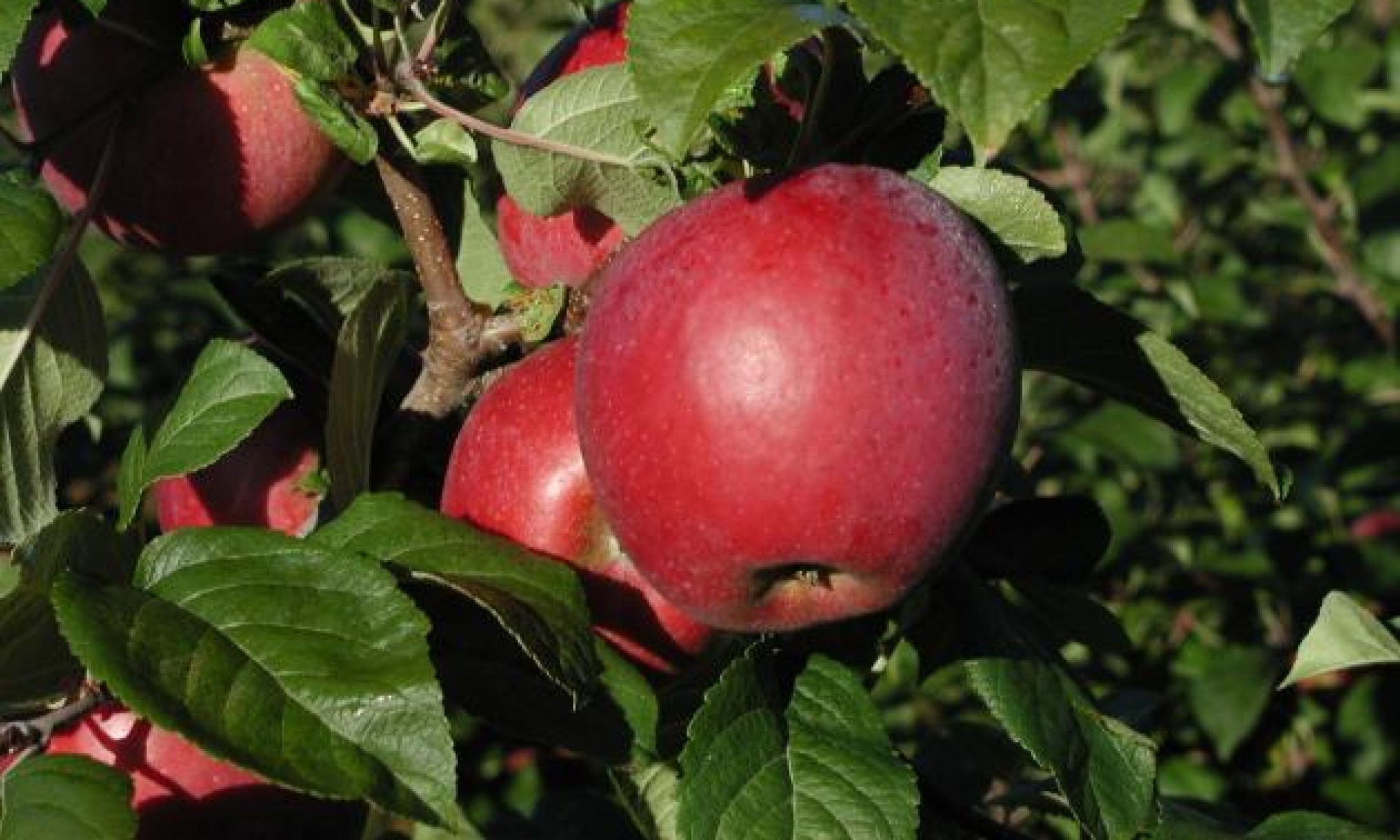
Some apple cultivars shrivel during cold storage which is cultivar dependent. One of the most common cultivars that this is a problem with is golden or yellow delicious due to a thinner layer of natural wax on the apple surface called the cuticle. This natural wax is what causes apple to shine when rubbed on a cloth (“buffing”). Although the apples are edible after shriveling, with pretty good flavor, it can be easily prevented. Placing the apples in a plastic …
Is fruit firmness the best measure to determine when to harvest apple fruit?
Apple flesh firmness is one criteria that is used to determine the maturity, and quality, of apples. However, it is not the best single indicator to determine the harvest maturity for apples. Apples are harvested at different stages of maturity depending on how long they will be in storage before marketing. Apples to be used shortly after harvest are tree ripened and picked at a much later stage of maturity than apples that will be stored for 6-9+ months. Flesh …
Why did my trees only produce a few blossoms in the spring?
There are several reasons why an apple tree does not produce a full bloom:
It is possible that the tree is too young and is just beginning to become reproductive, that is produce flowers. If this is the case, flowering should increase next year.
A young tree may be overly vigorous, spending its energy producing wood and leaves and not flowers. Over fertilization is a possible cause.
Flower buds are formed 10 or 11 months prior to bloom, that is …
What is the difference between cork spot and bitter pit?
Cork spot and bitter pit are both physiological disorders of apples caused by low levels of calcium. Visually, cork spots develop anywhere on the fruit, will be relatively small in number per fruit, are sunken and somewhat diffuse spots about 1/2 inch in diameter. Beneath the spot will be a corky area extending into the flesh of the apple. Bitter pit, on the other hand, develop only on the half of the apple opposite the stem, are smaller and a …
What does "low ethylene" apple cultivar mean?
Ethylene is a small gaseous molecule which is present in all plant tissues. Interestingly, it is a plant hormone and is actively involved in many physiological processes. One very important process in apples in which ethylene is intimately involved is ripening. Specifically, ethylene is the triggering molecule for apple ripening. If ethylene is removed from the fruit or its production is limited within the fruit, ripening will be slowed or, in some cases, nearly stopped. Low-ethylene cultivars have an inherently …
What causes mis-shaped apple fruit?
Fruit shape is affected by many factors. Mis-shapen fruit can result from insect or disease damage. Tarnished plant bug and plum curculio attack very young fruit. When that fruit matures, it often develops abnormally.
Probably, one of the most common causes of mis-shapen fruit is the development of seeds within the fruit. If seed development is dispersed around the core of the apple, usually the fruit will develop well and symmetrically. If the seeds develop only on one side of …
How much should my apple tree grow each year?
The amount of growth an apple tree should produce every year will depend on several factors. The greatest factor will be the rootstock on which the tree is growing. Trees on more dwarfing rootstocks will not grow as much as trees on more vigorous rootstocks. Another major factor is the cultivar of apple being grown. Some cultivars are very vigorous such as Granny Smith compared to less vigorous cultivars such as Honeycrisp. Many selections of red delicious are spur-type which …
Apple Tree Viruses
Virus and Other Graft-Transmissible Diseases and Disorders of Apples
Virus diseases cause economic losses through lower yields and reduced quality of apples and apple products. In general, virus diseases in perennial crop plants, such as apples, are more potentially damaging than in annual crops. Viruses can remain latent, spreading through an orchard and inflicting damage, often without the growers’ knowledge. Latent virus infection can produce small to moderate losses in fruit production. Often growers can maintain the productivity of diseased …
Apple Rootstock Info: M.7 EMLA
| Characteristic | Detail | Description |
|---|---|---|
| Rootstock | M.7 EMLA |
Formerly known as EM VII. Selected in 1912 from unknown parentage at the East Malling Research station in Maidstone, Kent, England. Trees on M.7 EMLA produce a semi-dwarf tree about 60 to 70% as big as seedling. Trees are moderately precocious and may lean with some cultivars and may require trunk support. Trees tend to produce many rootsuckers. M.7 EMLA has been widely planted since the 1960s with cultivars such as ‘McIntosh’, ‘Empire’, ‘Cortland’, |
Apple Rootstock Info: B.9
| Characteristic | Detail | Description |
|---|---|---|
| Rootstock | B.9 |
Resulted from a cross of M.8 x ‘Red Standard’ (Krasnij Standard) from Russia. B.9 has been tested widely and is used commercially in the U.S. In general, B.9 is slightly more dwarfing than M.9 and has slightly higher yield efficiency than M.9. B.9 was selected as a dwarfing cold hardy rootstock and initial inoculation results indicated that it was as susceptible to fire blight as M.9. However, in field trials, trees grafted onto B.9 survived |