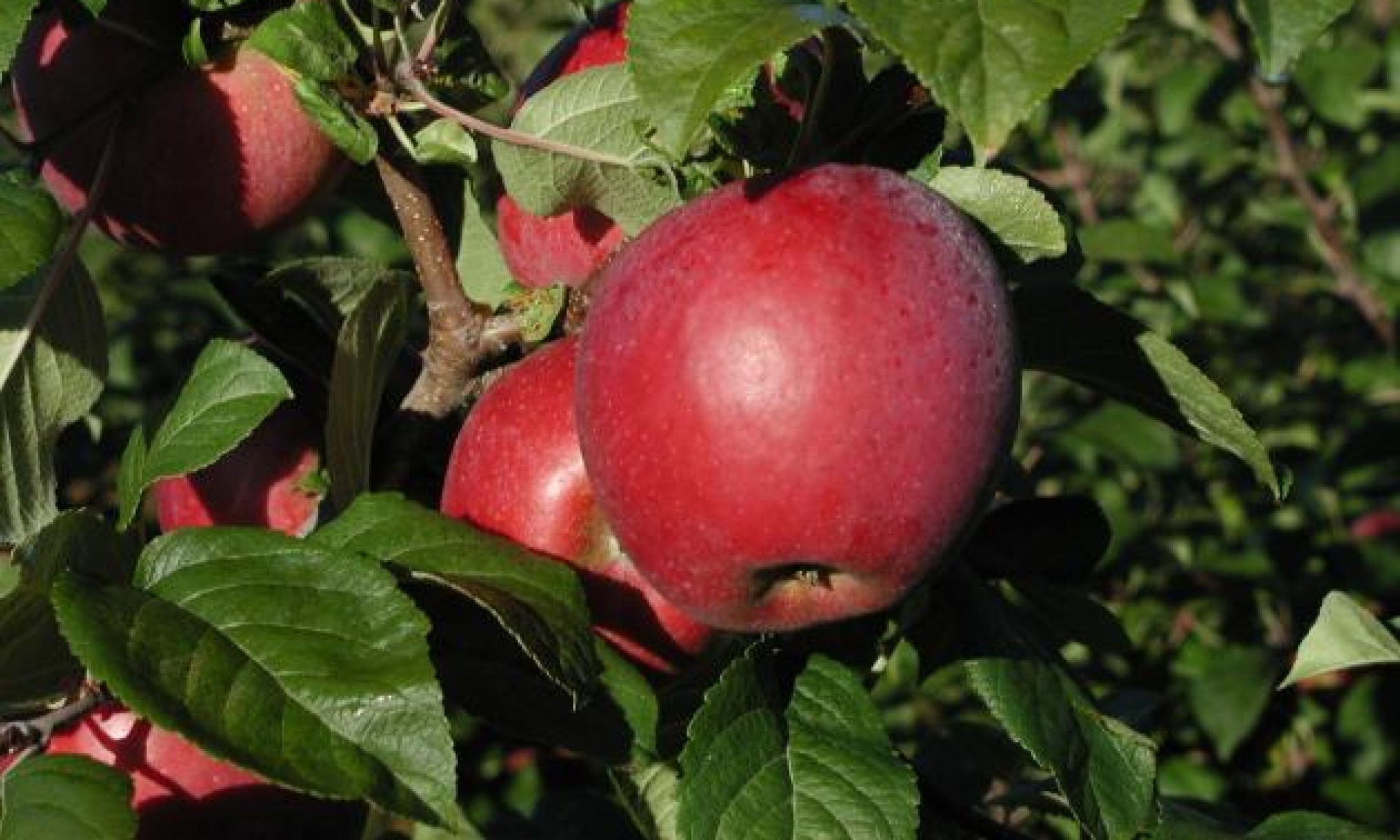
Understanding Apple Tree Size: Dwarf, Semi-Dwarf and Standard

Apple rootstocks have traditionally been divided into three groups: standard, semi-dwarf, and dwarf.

A standard size tree refers to trees growing on seedling rootstock. If trees on seedling rootstocks are not pruned to limit tree size, the trees will reach a height of about 30 feet and have a crown diameter of about 30 feet. Orchards planted before the 1960s often had only 40 trees per acre and were spaced 40 feet by 40 feet. With good pruning, standard size …
Burr Knots on Apple Trees

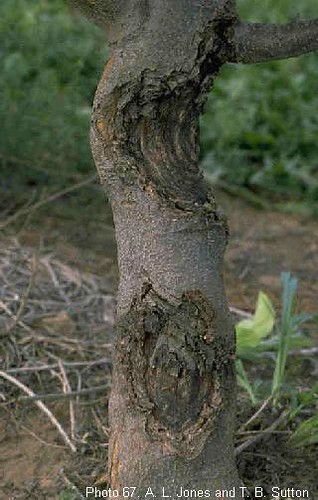
Burr knots are root initials that appear on the aboveground portion of the apple tree trunk. Some rootstocks, such as M.7, M.9, M.26, MM.106, and MM.111, are more prone to developing burr knots than others. Conditions that favor burr knot development include low light, high humidity, and temperatures between 68°F and 95°F.

Burr knots are problematic in a couple of ways. They can be an entry point for organisms, such as dogwood and plum borers, woolly apple aphids, fire blight …

Phytophthora Root, Crown, and Collar Rot of Apple

Crown or collar rot has caused extensive death of apple trees in many eastern orchards during the past two decades. It often occurs on trees between 3 and 8 years of age grown on Malling-Merton 104 (MM. 104), MM. 106, and, to a lesser degree, MM. 111 rootstocks. The disease often affects low areas of orchards having heavy, poorly drained soils, but it can affect all orchard sites if trees are first infected in the nursery.

The first symptoms to …

Woolly Apple Aphid

The woolly apple aphid, Eriosoma lanigerum (Hausmann), is a reddish brown insect covered with a white wax mass produced by specialized dermal glands. This wax mass gives the insect its characteristic woolly appearance (fig. 1). The woolly apple aphid is distributed worldwide.

The most important form of injury caused by woolly apple aphids is root injury, consisting of galls at feeding sites (fig. 2). This root injury can reduce the growth of young apple trees; mature trees are affected to …

Table of Apple Rootstock Susceptibility to Phytophthora spp.

Apple Phytophthora root, crown, or collar rot has caused extensive death of apple trees in many eastern orchards during the past two decades. It often occurs on trees between 3 and 8 years of age grown on Malling-Merton 104 (MM.104), MM.106, and, to a lesser degree, MM.111 rootstocks. The disease often affects low areas of orchards having heavy, poorly drained soils, but it can affect all orchard sites if trees are first infected in the nursery. This table illustrates susceptibility …

Apple Rootstocks and Virus Status

The virus status of a tree or rootstock simply refers to whether the plant material in question is free of known viruses. The original Malling rootstocks, such as M.7, M.26, and M.9, contained some viruses. Many viruses are latent and do not produce visible symptoms, so it is difficult to know whether a tree is infected with a virus. Most of the Malling rootstocks have been “cleaned up,” and the virus-free rootstocks carry the suffix “EMLA” (East Malling and Long …

Buying Apple Trees: Choosing a Nursery

Choose a nursery carefully when ordering trees.

  • Ask if the nursery has the cultivar and strain, rootstock, tree size, and quality that you want and if it has enough in stock to meet your needs.
  • Don’t accept an undesirable cultivar-rootstock combination. You could end up with a spacing problem in your orchard if you plant a mixed block of cultivars, strains, and rootstocks. You’re better off to delay your planting for a year until you are able to get

Table of Juniper, Hawthorn, and Crab Apple Resistant to Rust Diseases


Cedar-apple rust is a fungus disease of apple and cedar and spends parts of its life cycle on each host. It is caused by Gymnosporangium juniperi-virginianae. The fungus can infect leaves and fruit of most cultivars in the eastern region. This table lists juniper, hawthorn, and crab apple cultivars with resistance to rust diseases. 

Juniperus (Juniper) Crataegus (Hawthorn) Malus (Crab Apple)
Cedar-apple and hawthorn rust resistant Cedar hawthorn rust resistant Cedar hawthorn rust resistant
J. ashei C. crus-galli ‘Adams’

Table of Apple Cultivar Fire Blight Susceptibility

Fire blight is a destructive bacterial disease of apples and pears that kills blossoms, shoots, limbs, and, sometimes, entire trees. The disease is generally common throughout the United States wherever apples are grown. However, outbreaks are typically very erratic, causing severe losses in some orchards in some years and little or no significant damage in others. This table shows the fire blight resistance rating of numerous apple cultivars.

 
Apple cultivar Fire blight resistance rating (z) Apple cultivar Fire blight resistance

'Golden Delicious' Necrotic Leaf Blotch in Apple Trees


Figure 1. ‘Golden Delicious’ apple leaves showing leaf blotch and yellowing associated with NLB. Photo: T. B. Sutton, North Carolina State University, and A. L. Jones, Michigan State University.
Golden Delicious apple leaves showing leaf blotch and yellowing associated with necrotic leaf blotch. Photo courtesy of T. B. Sutton, North Carolina State Univ. and A. L. Jones, Michigan State Univ.

Necrotic leaf blotch (NLB) is a physiological disorder whose occurrence is related to air temperature, light intensity, and soil moisture. The cause of NLB of apple is not known. Symptoms that are enhanced by gibberellins and reduced by abscisic acid are evidence that a hormonal imbalance may be involved. The disorder …