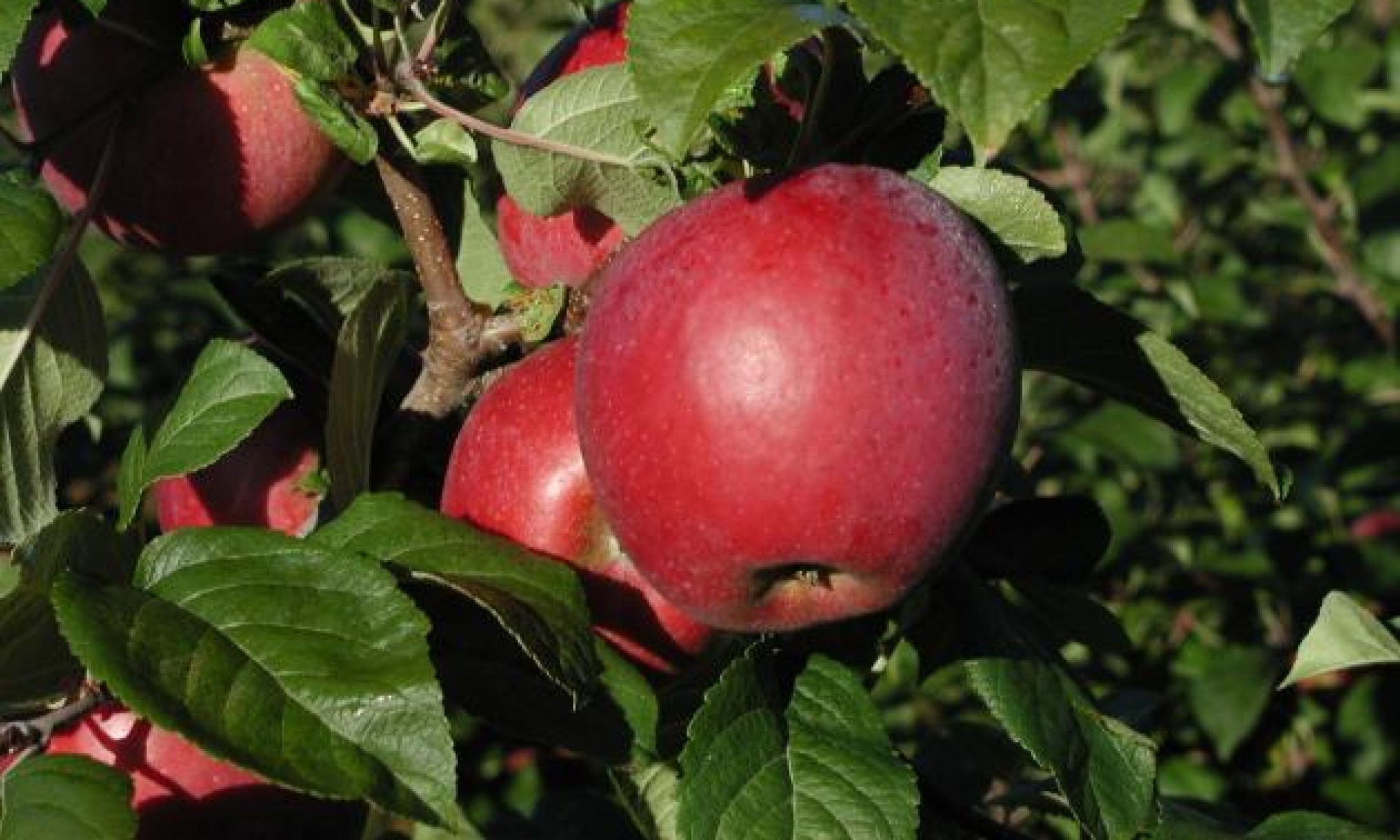
In selecting the best strain of a cultivar it is important to talk to other fruit growers, cooperative extension personnel and nursery owners. Solicit advice from these groups that know your local growing conditions. Check to see if any of these people have trees of the strain you are interested in and visit their orchards to see fruit on the trees. If you are looking to plant large acreage of a particular strain you should set out a few trees, …
Disease Management in Apple Trees and Fruit
- Apple Mosaic Virus
- Apple Scab
- Armillaria Root Rot
- Bitter Rot
- Blister Spot
- Black pox
- Black Root Rot
- Black Rot
- Blue Mold
- Brooks Spot
- Cedar-Apple Rust
- Fire Blight
- Fly Speck
- ‘Golden Delicious’ Necrotic Leaf Blotch
- Latent Viruses
- Nectria Canker
- Nectria Twig Blight
- Phytophthora Root, Crown and Collar Rot
- Powdery Mildew
- Quince Rust
- Sooty Blotch
- Southern Blight
- Thread Blight
- Union Necrosis and Decline
- Viruses
- White Root Rot
- White Rot
- Wood Rots
- X-Spot
Apple Rootstock Info: V.1
| Characteristic | Detail | Description |
|---|---|---|
| Rootstock | V.1 |
The Vineland series of apple rootstocks originated as open-pollinated hybrids of ‘Kerr’ crabapples and M.9 rootstock and were selected at the Horticultural Experiment Station at Vineland, Ontario, Canada in 1958. According to information from the Ontario Ministry of Agriculture, Food and Rural Affairs, V.1 is in the M.26 size class, and yield and yield efficiency are usually greater than M.26. V.1 is cold hardy and somewhat resistant to fireblight. V.1 was included in the 1994 |
Wildlife Problems of Apple Trees and Fruit
- Deer Damage on Apple Trees
- Mouse/Vole Damage on Apple Trees
- Raccoon Damage on Apple Trees
Apple Rootstock Info: G.935
| Characteristic | Detail | Description |
|---|---|---|
| Rootstock | G.935 |
G.935 is a 1976 cross of Ottawa 3 and Robusta 5. Size is reported to be slightly larger than M.26, but the rootstock has resistance to fire blight and crown rot. It is not resistant to woolly apple aphid. Production efficiency is rated equal to M.9. In the Golden Delicious trial at Rock Springs in 2006, tree size was about 9 percent larger than M.9 and 12 percent smaller than M.26. Production efficiency was not |
Other Challenges of Growing Apples
- Effect of Temperature on Apple Trees
- Effect of Water on Apple Trees: Not Enough or Too Much?
- Timing of Apple Tree Bloom
- Apple Fruit Thinning
- Hail Injury on Apple Trees and Fruit
- Effect of Wind on Apple Trees
- Sunburn of Apple
- Pre-harvest Drop
- Sunscald of Apple
- Sunscorch of Apple
- Fruit Cracking of Apple
- Bitter Pit and Calcium Deficiencies in Apple Fruit
- Apple Skin Russetting
Apple Rootstock Info: G.11
| Characteristic | Detail | Description |
|---|---|---|
| Rootstock | G.11 |
Resulted from a cross of M.26 and Robusta 5 crabapple and introduced in 1993 by the New York State Agricultural Experiment Station, Geneva, NY. G.11 is one of the more vigorous dwarfing rootstocks and produces a tree similar in size to M.26. It is precocious (similar to M.26), moderately resistant to fire blight, moderately susceptible to woolly apple aphid and crown an root rots, and requires trunk support, especially in the early years. It produces |
Propagating Apple Rootstocks and Trees
Apple Rootstock Info: G.214
| Characteristic | Detail | Description |
|---|---|---|
| Rootstock | G.214 | Geneva 214 (G.214) is a cross of Robusta 5 x Ottawa 3 and tested as CG.4214. Trees on this rootstock will need to be supported and produce a tree about 30-35% size of seedling with vigor and precocity similar to M.9 Nic.29 and M.26. Trees are more productive than those rootstocks and have good cold hardiness, and are resistant to fire blight, Phytophthora root rot and wooly apple aphid. Source: https://extension.psu.edu/apple-rootstocks-capabilities-and-limitations |
| Synonyms | Geneva 214 | |
| Origin |
Controlling Apple Tree Size by Horticultural Means
Rootstock
The use of dwarfing rootstocks is the primary means utilized to affect tree size. Apples are the fruit crop that most commonly utilizes dwarfing rootstock. Size range from the very dwarfing rootstocks such as M.27 and P.16 to nearly standard size rootstocks such as MM.111 and MM.106. In pears there is not nearly the range in size controlling rootstocks the majority of which are only +/- 20% the size of seedling. Recently dwarfing rootstocks for cherries have been introduced