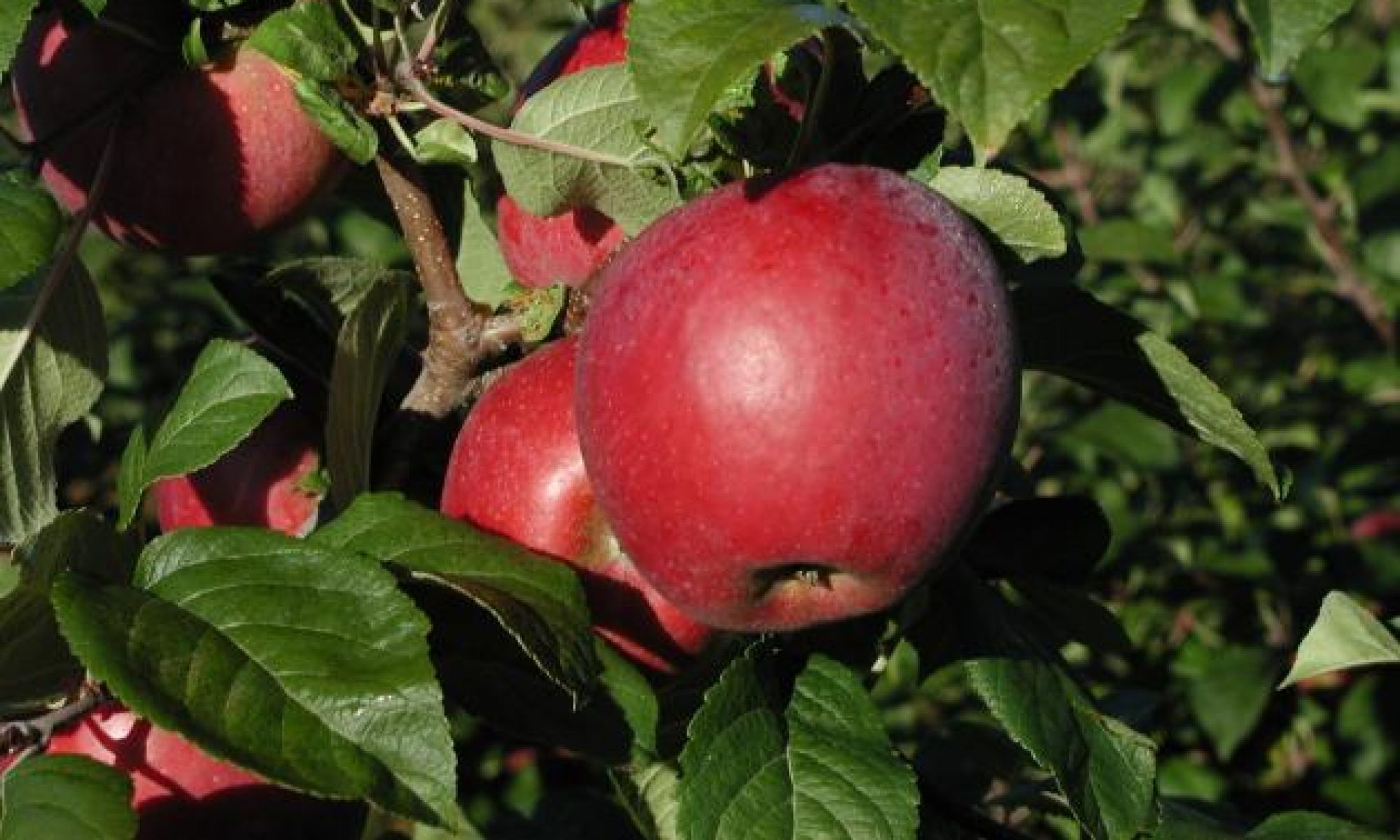
Yes. Fungicide applications are an essential component of effective scab management, even though a cultivar may be resistant to the scab fungus. The fungicide applications contribute to the preservation of the plant’s resistance genes, which are subject to continuous evolutionary pressure from plant pathogens. For scab-resistant cultivars in particular, the most critical period for fungicide applications is during the primary infection cycle in the spring. Spores from over-wintered leaves on the ground are the “offspring” of the previous year’s infections …
Apple Rootstock Info: Supporter 1
| Characteristic | Detail | Description |
|---|---|---|
| Rootstock | Supporter 1 |
Resulted from a cross between M.9 and Malus baccata (L.) Borkh. Supporter 1 was tested at seven locations in the NC-140 1999 trial with ‘Fuji’ as the scion cultivar. Supporter 1 trees had good survival and trees were about 75% as big as M.9 NAKBT337, produced similar numbers of root suckers as M.9 and had slightly high yield efficiency than M.9. European tests indicate it is quite cold hardy. |
| Synonyms | Supp1 | |
| Origin | M9 X |
Besides the use of rootstocks what horticultural methods can I use to control apple tree size?
The primary method of controlling apple tree size is by using dwarfing rootstocks. While dwarfing rootstocks are the most common practice for controlling size in fruit trees, there are many other methods or techniques used to control the size and vigor of trees. Any practice increasing the harvest index or proportion of biomass going into fruits rather than wood or leaves will tend to reduce the size (total volume or biomass) and vigor (rate of growth) of trees. These horticultural …
Apple Rootstock Info: M.4
| Characteristic | Detail | Description |
|---|---|---|
| Rootstock | M.4 |
Selected in 1912 from unknown parents at the East Malling Research Station in Maidstone, Kent, England. M.4 is slightly dwarfing and produces a tree about 75-80% standard size. It is considered fairly precocious, and trees tend to lean and may require trunk support. M.4 is resistant to collar rot. In an Indian rootstock trial trees on M.4, MM.106, and MM.111 were all about the same size. Cumulative yield was greater than trees on MM.111, similar |
What causes internal breakdown of apple fruit?
Internal browning is a low-temperature storage disorder of certain apple cultivars which develops in some fruit stored at or just below freezing. A cross section of an apple typically shows affected tissues to be brown and firm and usually radiating out from the core. Occasionally, the browning may be confined only to the core or the core area can be normal and browning is in the outer layers. Firm fruit allows the diagnosis of internal browning from the other internal …
Apple Rootstock Info: J-TE-H
| Characteristic | Detail | Description |
|---|---|---|
| Rootstock | J-TE-H |
Released from Techobuzic, Czech Republic. The early descriptions from Czech researchers suggested that J-TE-H produces a tree about the size of trees on M.26 EMLA. In rootstock trials in the Czech Republic and Spain J-TE-H produced trees about 35 to 40% of standard size, trees produced a moderate number of root suckers, and yield efficiency was less than the other dwarfing rootstocks in the trial (Pajam 1, Pajam 2, M.9, and J-TE-E). J-TE-H was included |
How do I know when it is the right time to pick an apple cultivar?
Time of harvest depends on the intended use of the apples. Apples that will be consumed immediately can be left on the tree longer than those intended for cold storage. Generally, fruit can be harvested from the tree over a couple of weeks. Fruit that drops from the tree is usually over ripe. To determine the approximate time of harvest, check a fruit tree nursery catalog or their web site for a list of harvest dates for various cultivars. These …
Apple Rootstock Info: V.3
| Characteristic | Detail | Description |
|---|---|---|
| Rootstock | V.3 |
The Vineland series of apple rootstocks originated as open-pollinated hybrids of ‘Kerr’ crabapples and M.9 rootstock and were selected at the Horticultural Experiment Station at Vineland, Ontario, Canada in 1958. According to information from the Ontario Ministry of Agriculture, Food and Rural Affairs, V.3 is slightly smaller than M.9 EMLA and yield and yield efficiency is similar to M.9 EMLA. V.3 is cold hardy and somewhat resistant to fireblight. V.3 was included in the 1994 |
Why did my apple trees bloom heavily but only set a few fruit?
There are several possibilities why apple trees bloom but fail to set fruit:
- Apples are not self-fertile and need another apple tree or tree(s) of another different variety (or varieties) so the flowers can be pollinated (by bees, see #2.) and set fruit.
- Apple flowers rely on bees to carry the pollen from one variety to another so the flower(s) can be pollinated and the fruit can set and begin to grow. Both domestic honeybees and wild pollinators (bees, wasps)
Apple Rootstock Info: Ottawa 3
| Characteristic | Detail | Description |
|---|---|---|
| Rootstock | Ottawa 3 |
Introduced by the Agriculture Canada Research Station in Ottawa, Ontario, Canada in 1974 as a hardy dwarfing rootstock. The parents were M.9 and ‘Robin’ crab. Ottawa 3 roots poorly in the stoolbed and is often micropropagated. Trees are precocious and produce few rootsuckers and burrknots. It is sensitive to apple stem grooving virus. Ottawa 3 was included in the 1990 NC-140 cultivar/rootstock trial at 12 locations and the 1990 dwarf rootstock trial at 8 |